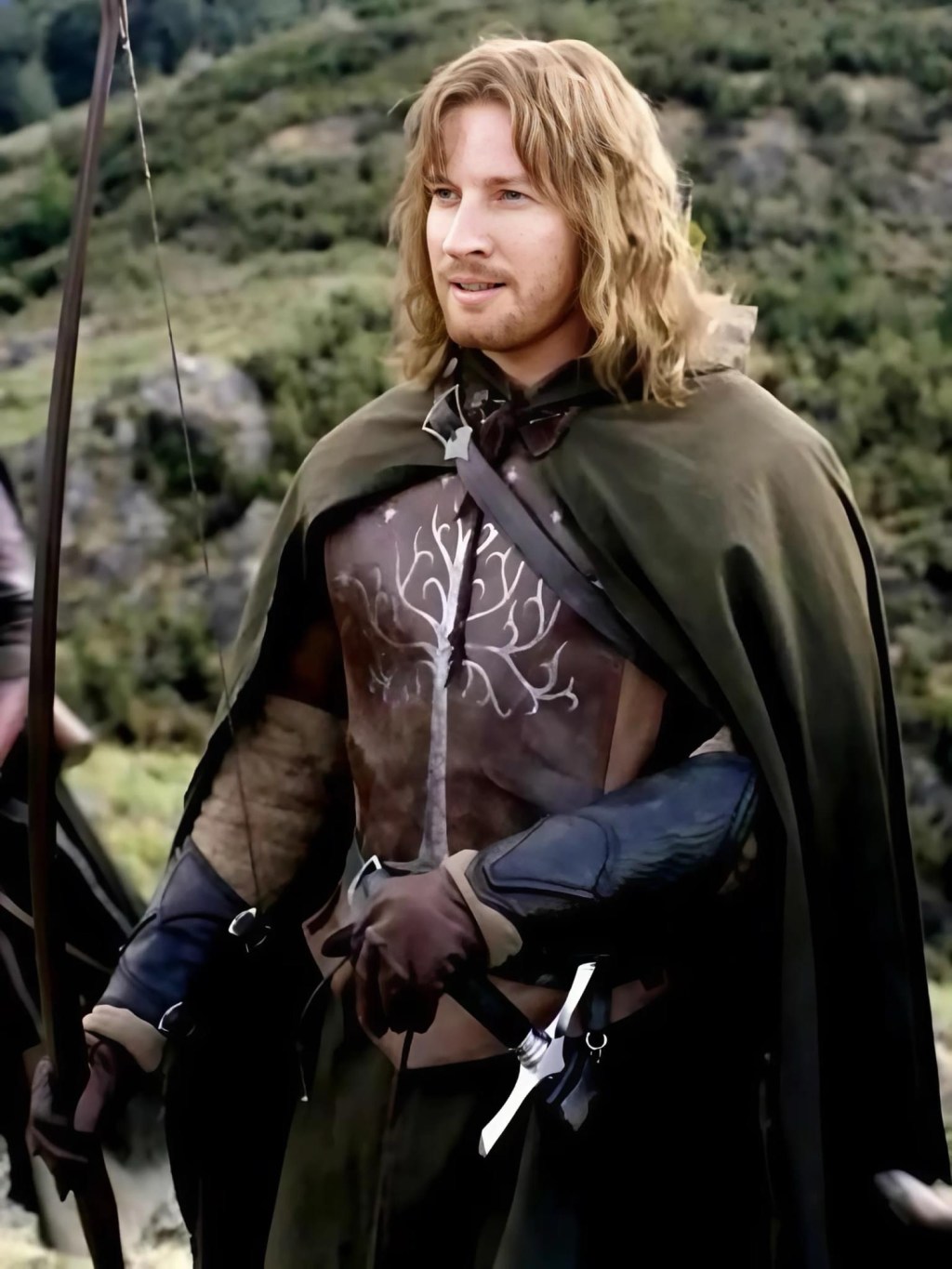
Faramir is my favourite character in The Lord of the Rings, alongside Éowyn of course. He’s very friendly with Gandalf, from whom he learns a lot of old lore and legends. They hang out in the library together, and Gandalf reveals to him the name that he was known by in Valinor. Faramir said in the book that he wouldn’t touch the Ring if he found it lying by the side of the road, and I believe him. Tolkien said in one of his letters that Faramir is the character who is most like him, and Tolkien said of himself that he would not have been interested in the power of the Ring either. Faramir is the best partner for Éowyn because he does not try to change her warrior ways.
So why did Peter Jackson (the director of the movie) make Faramir decide to take Frodo and Sam and the Ring halfway to Gondor, before changing his mind and letting them go?
Various reasons have been suggested: that the Ring must be seen to be overwhelmingly powerful and tempting. (This would also explain why Jackson decided to remove Tom Bombadil from the film plot, because he also shows no interest in the Ring — which meant removing the Barrow Downs and the satisfying bit of business with the knife made by the Men of Westernesse, which Merry finds in the barrow and later uses to help kill the King of the Nazgûl.) But as Tolkien Gateway points out, Aragorn easily resists the Ring at the end of the first movie, so it is not consistent.
Another suggestion is that because Faramir’s father Denethor preferred his brother Boromir, this meant that Faramir felt the need to try to win back his father’s love by taking him the Ring. But Faramir had already broken away from his father psychologically, and embraced Gandalf’s values and outlook, so he wouldn’t have brought the Ring to Denethor to try to get back into his good books.
But it’s very clear that, as Samwise Gamgee remarks, Faramir is a man of true quality, as he demonstrated by not taking the Ring:
“… I would not take this thing, if it lay by the highway. Not were Minas Tirith falling in ruin and I alone could save her, so, using the weapon of the Dark Lord for her good and my glory. No, I do not wish for such triumphs.”
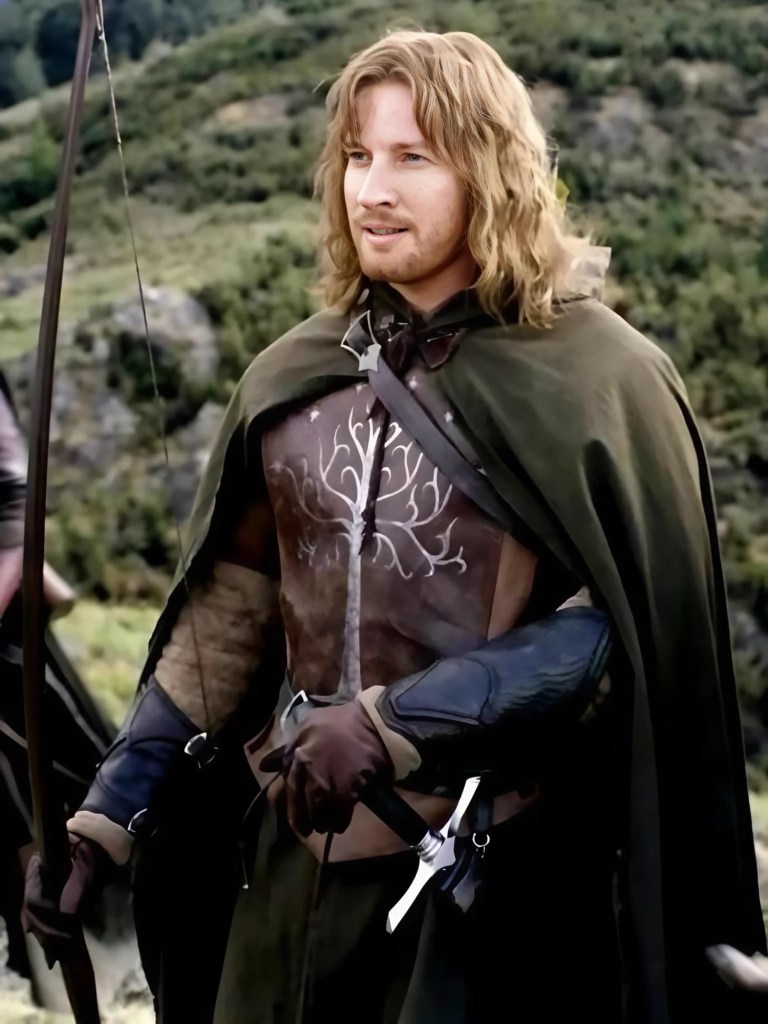
This Facebook post about Faramir also points out that Tolkien wrote in one of his letters that:
“When Faramir speaks of his private vision of the Great Wave, he speaks for me. That vision and dream has been ever with me—and has been inherited (as I only discovered recently) by one of my children, Michael.”
— The Letters of J.R.R. Tolkien (letter 180)
For Faramir, the dream was a flashback to the destruction of Númenor. I think Tolkien felt that for him, it was a flashback to the destruction of Atlantis.
The Tolkien Gateway site adds:
Faramir in many ways speaks for Tolkien, who was an officer in the British Army during World War I, when he says, for example, “I do not love the bright sword for its sharpness… I love only that which they defend”.[4] Much later, Tolkien would write, “As far as any character is ‘like me’, it is Faramir”.[22]
I’ve always liked Faramir and Aragorn because they remind me of Robin Hood, another one of my favourite characters. They stand up for the small people. For many years, Aragorn protected the Shire from marauders. Faramir’s men in Ithilien idolized him because he was a good, fair, and kind leader, as well as loving Nature, lore, books, music, and stories. He patrolled Ithilien to keep the Haradrim out of Ithilien and Gondor.
Side note: if you like David Wenham, check out the movie version of Pope Joan (2009), an adaptation of the novel Pope Joan (1996) by Donna Woolfolk Cross, where he plays her beloved, Gerald.
And if you like LoTR fan fiction, check out my short story, Ithilien After The War.
 Dowsing for Divinity
One response to “Faramir”
[…] plenty of people have successfully resisted the temptation to use the Ring. So why should Faramir not be among them? He is not interested because he knows that one of its names is “Isildúr’s […]
LikeLike