The story of Gelert is incredibly poignant and sad. But it’s also made up… or is it?
Certainly the Welsh version didn’t happen to Prince Llewellyn and his faithful hound Gelert, and the “grave” in Beddgelert is empty, but there are many different versions of the story.
But as Brett Hollyhead wrote on Threads:
I have such a bittersweet love for the story of Gelert. The harrowing tale of Llewellyn’s faithful dog was taught to me in school and has always stuck with me, invoking a visceral, sorrowful feeling despite the tale itself being invented by David Pritchard.
But regardless if it fabricated or influenced by stories from different locations, Gelert has grown beyond its narrative confines. It has been transformed by the collective love each one of us has for our canine companions with many visiting Beddgelert as part of a pilgrimage to pay homage.
The story itself is real upon an emotional level, an entry point that serves to teach the importance of not acting rashly as well as how lucky we are to have the love of a good dog.
So true! We watched Inside the Mind of a Dog on Netflix last night and it was clear that dogs are very intelligent and sensitive.
The story of the faithful dog who defends his humans’ baby from a large predator while his human is out, but then the man thinks that the dog has killed the baby because there’s blood everywhere, so he kills the dog, and then finds the body of the predator, and the baby safe and sound, is incredibly sad, powerful, and resonant.
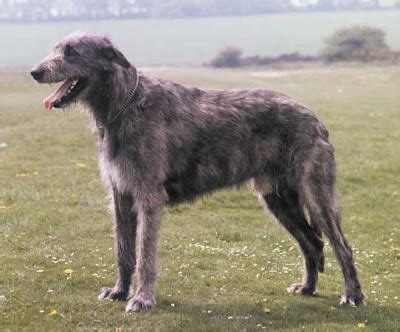
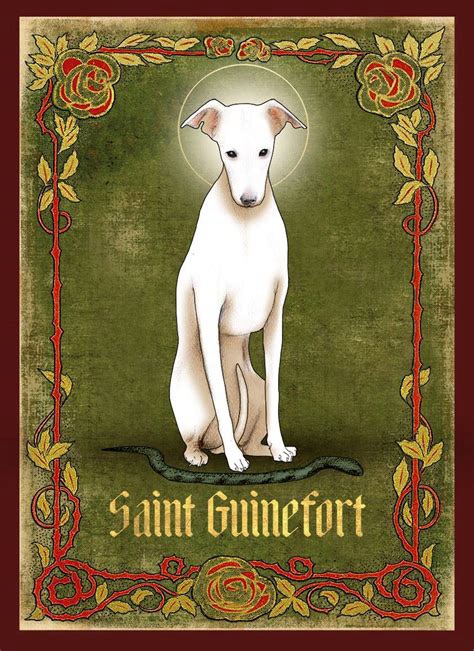
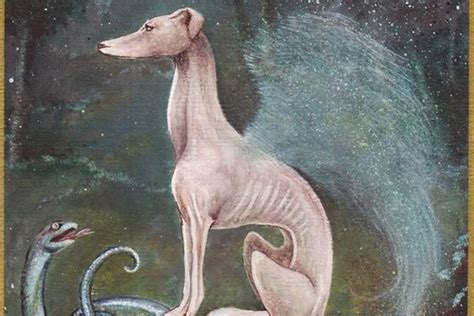
I have come across the versions from Brittany (where the dog is called Guinefort and was venerated as a folk saint until his shrine was destroyed by an over zealous churchman in the 1200s), and India, where the human was a Brahmin’s wife, and the faithful animal is a mongoose. In both the Indian and the Breton versions of the story, the predator killed by the dog was a large snake. In the Welsh version of the story, the predator was a wolf.
The Holy Guinefort even has his own saint’s day, 22 August.
The story is classified as Aarne-Thompson type 178A. According to Wikipedia:
The story occurs in all versions of the Panchatantra, as well as the later Sanskrit works Hitopadesha and the Kathasaritsagara. It also occurs in most of the languages of India (and South Asia) where it is extremely familiar. For instance, in the South Indian state of Karnataka, the story occurs as a proverb in inscriptions,as a sculpture in a temple, in narratives of travelling storytellers and singers, and in film. Similarly, the Tamil epic Silappatikaram recalls the story simply by its name.
Like the rest of the Panchatantra, in its westward migration it travelled from Sanskrit to Arabic (as Kalila wa Dimna), Persian, Hebrew, Greek, Latin, Old French, and eventually into all the major languages of Europe (as The Fables of Pilpay or Bidpai), ranging from Russian to Gaelic to English. In its eastward migration, it appears in Chinese (ten versions, including in a redaction of the Vinaya Pitaka), and over a wide region from Mongolia to Malaysia. It is also the only story found in all recensions of the Panchatantra, all versions of the “Book of Sindibad” (not Sindbad), and all versions of “The Seven Sages of Rome“.
It is also found in Mexico and the United States. Blackburn observes that the fable is not a dead tradition and is still current, as a Belgian newspaper reported it as an anecdote about a man who left his son and dog in a shopping trolley in his car.
The story is indeed still current. The guy who is building our extension told me the story the other day. The version he had been told had been updated to the 19th century and in this version, the human shot the dog before finding the wolf. I think it was still set in Wales though… and as the last wolf in the British Isles was killed in about 1440, it’s clearly a retelling of the Gelert story. It gets retold because it tugs at our heartstrings to think of the good faithful dog being killed for doing his job.
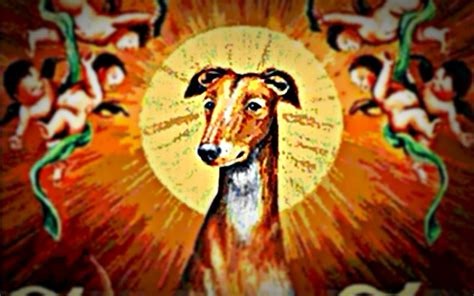
My theory is that it’s a very old story — maybe thousands of years old — that has been retold over generations. I like to imagine it in a small dwelling towards the end of the last Ice Age.
I’d also like to imagine that the story is fictional or perhaps a might-have-been, a near miss. “Did you hear about old so-and-so? He came home the other day and found blood all over the floor and thought the dog had killed the baby, and he nearly killed the dog, but it turned out that the dog had killed a large predator.” That would very quickly have changed into the man actually killing the dog, because the remorse he felt would tug at the hearts of the listeners, making it a more effective story.
The other thing the very widespread transmission of this story tells us is that humans love a good story, even a very sad one, and will pass it on to others. And it speaks to human’s love of dogs and reminds us to trust them and not see them as a barely-domesticated wolf, because they are very faithful animals.




 Dowsing for Divinity
One response to “Gelert, Guinefort, and other animals”
I always thought that the point of the story is that the good ruler makes sure he knows all the facts before he makes a decision, rather than seeing half the truth and acting rashly and wrongly.
LikeLiked by 1 person