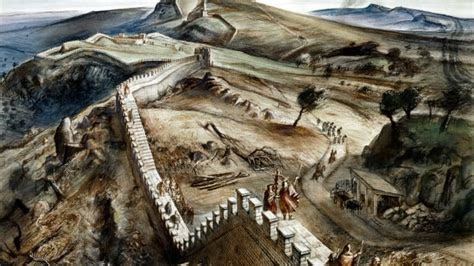
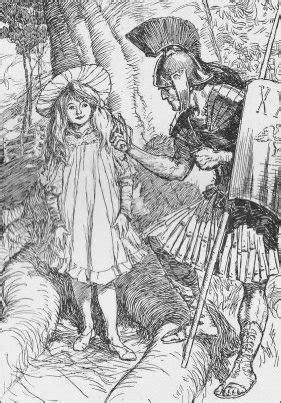
Parnesius and Pertinax: A loving homage to the story of Parnesius and Pertinax in Puck of Pook’s Hill, by Rudyard Kipling. This was the book that made me realize that I am a Pagan.
Paio Pavonius sighed wistfully. The commander and his best friend were standing on the ramparts of the Wall again, looking out towards the debatable ground where the Picts hunted, and the wreckage of Roman wars lay scattered across the heather.
“Ain’t no good you getting your hopes up about Pertinax,” whispered Tertius, the thief from Lutetia who had been sent to the Wall instead of being executed, because his uncle was a Procurator. “Everyone in the cohort knows Pertinax is sweet on Parnesius. You’re never going to get a look in.”
“But Parnesius likes girls,” said Paio.
“And Pertinax is in love with being in love,” said Tertius. “Not only that but he’s convinced that he is doomed to spend the rest of his life on the Wall.”
Paio sighed. “Maybe one day Parnesius will find a girl. Last summer I thought he had a crush on that Winged Hat, what was his name…?”
“Amal,” said Tertius. “Strange when all the Winged Hats have uncouth names like Bjorn and such like.”
“That was the name. But it was because they both worshipped Mithras,” said Paio.
“Hssh, they’re coming,” said Tertius.
“Look lively, men,” said Parnesius. “Try to look like Roman soldiers.”
Pertinax smiled at the men. “Take some air on the battlements, it’s glorious.”
Paio admired Pertinax’s curly hair, kind brown eyes, and rippling muscles. He longed to run a finger down the vein that stood out from his right bicep, while losing himself in the depths of his eyes. That night, Paio carved Pertinax’s name over and over into his wax tablets, and then erased it.
The next day, a letter arrived to let the two commanders know that their mentor, Maximus, had been executed by his rival, Theodosius. Paio and Tertius were not present for the conversation, but they saw the parley that Parnesius and Pertinax held with the Winged Hats, and from the mile-tower, they saw from afar how the two men were crushed by the news. And when the two captains returned to the Wall, they commanded the great war trumpets to be blown, and the men heard the wailing of the Picts, who knew they would be crushed between the Romans and the Vikings like so many grains of heather blossom between two quern-stones.
The war with the Vikings was grim, and many died on both sides. The snow north of the wall was red, and the mile-towers fell one by one. There was no time for Pertinax to gaze longingly at Parnesius, nor for Paio to dream of Pertinax.
One day, about a month into the war, Tertius was killed by a stray arrow. “We will make him a burial fit for a hero,” said Parnesius, and caused a memorial stone to be erected on Tertius’ grave with his name and a dedication to the god of Lutetia, Cernunnos.
Finally, after two months and seventeen days, when the Roman garrison had retreated into the last mile-tower and collapsed into an exhausted sleep, and the Vikings had withdrawn for a time, a legion of reinforcements arrived and woke them. Paio enjoyed seeing the fresh recruits among them, remembering how he himself had been a fresh-faced boy before he came to the Wall.
Once again Pertinax and Parnesius had a long conversation with the commander of the legions relieving their troops, and emerged smiling, much to Paio’s relief.
“We’re going home, men!” announced Pertinax.
“But first they’re giving us a Triumph,” added Parnesius. The men cheered raggedly, still exhausted from the long battle.
Paio looked at the two commanders. They still held themselves like Romans, but the brutality of the war had etched itself into their once youthful faces. He waited to speak to them.
“I must go to Nicaea to see my mother,” said Pertinax.
“Well, I’m off to Vectis,” said Parnesius. “I’ll write, of course.”
“I’m sure your sister’s friends will be all grown up and one of them will be gazing adoringly at you soon,” said Pertinax.
Paio seized his chance. “I have no home to return to,” he said sadly. This was true, but he thought it likely that Pertinax would be kind to him.
“Come to Nicaea with me,” said Pertinax. “I will need some good men with me.”
“A good man is hard to find,” said Parnesius without a trace of irony. “But there are many of them in this garrison.”
“Especially you, Paio,” said Pertinax.
Paio blushed. He wasn’t sure if Pertinax had ever noticed him until now.
“I see your valour and your devotion to the gods of Rome,” said Pertinax.
Paio smiled. “I reckon my devotions got me through the fighting without too many scratches.”
“Well, let’s get to the bath-house to get cleaned up for this Triumph,” said Parnesius. He had of course noticed the way Pertinax looked at him, and the way that Paio looked at Pertinax, so halfway to the bath-house he said, “Oh bother, I forgot my strigil—I’ll let you two go on ahead.”
When he arrived at the bath-house, Paio and Pertinax were rubbing each other down with olive oil and cleaning each other with their strigils. Parnesius smiled quietly to himself and went to reminisce about the war with the old General, Rutilianus.
The Triumph was splendid, and everyone enjoyed the frosty sunlight glinting off freshly polished armour and weapons, as the garrison marched through the town of Hunno that straggled down the road to the south of the Wall.
Later, during the feast after the Triumph, Parnesius promoted Paio to the rank of officer—just to make sure things went smoothly.
The next day they marched south. They went to Eboracum with its great walls, and arrayed themselves in decent clothes and enjoyed the merchants displaying their wares from east and west: amber from the Baltic, ivory from the Indies, and woollen cloth from the rich pasture lands far to the south of the Wall. Then they made the long march to the south coast, and eventually to Clausentum. Here Parnesius and Pertinax parted. Parnesius took ship for Vectis, and Pertinax and Paio for mainland Europe. They embraced lovingly—with much back-slapping from Parnesius. It was poignant to see Pertinax’s curly hair resting on Parnesius’ shoulder for the last time.
“Farewell, dear friend and brother,” said Parnesius. “Io Pan, vade Mithras — and either I will visit you in Nicaea or you shall visit me here.”
“Farewell, beloved friend,” said Pertinax. “Even if we do not meet again this side of Elysium, I shall never forget you.”
Only when Parnesius’ ship was under way, and the sail had almost disappeared into the glittering horizon at the far end of the channel, only then did Pertinax turn away, smiling at Paio through his tears.
“Come on then, Paio,” he said, casually stretching his arm around Paio’s shoulders. “I know a good bath-house and eatery near here. Our ship doesn’t sail till tomorrow.”
“Um, captain…?” began Paio. But Pertinax placed a slender finger on his lips.
“I know, Paio. I have seen.” And he kissed Paio on the cheek. “There’s more where that came from. But first, dinner. I want our first time to be special.”
They dined in a little place beside the river. Flaming torches were reflected in the water. A musician plucked out some plangent notes on a lyre, and sang of his lost love, Lalage.
Later, as they strolled back to Pertinax’s lodgings, Paio asked, “How long have you known?”
“I saw you whispering with Tertius that time on the Wall. I wasn’t sure then—and I still hoped that Parnesius would—“
This time it was Paio who stopped Pertinax, kissing him full on the lips. They walked quickly back to the lodging house, and Pertinax locked the door. He let his toga fall to the floor and helped Paio out of his army uniform. As he did so, he let a trail of kisses fall on Paio’s arms, face, chest.
“You waited for me,” he said.
“I did,” said Paio.
They made love slowly and languorously and fell asleep in each other’s arms.
The Wall: Hadrian’s Wall
Hunno: fictional town behind the wall
Eboracum: Roman York
Clausentum: Roman Southampton.
Vectis: The Isle of Wight

 Dowsing for Divinity