The huge diversity of personifications, spirits, deities, and other entities that are associated with Yule and Christmas is astonishing. There are multiple versions of Father Christmas (aka Santa Claus); there’s Krampus, Black Peter or Sooty Piet, Perchta, Lucia, Frau Holle, Befall, the Yule Goat, the Yule Cat, and many more. Not forgetting the three Dickensian ghosts from A Christmas Carol, and the spectral protagonists of many a festive ghost story.
Old Father Christmas (England)
Old Father Christmas has a long history dating back to the 1500s, and was a personification of the merriment of Yuletide: feasting and drinking—definitely associated with adult merrymaking.
in Tudor and Stuart times, specially appointed ‘Lords of Misrule’ oversaw Christmas celebrations in aristocratic houses, and were sometimes given names like ‘Captain Christmas’, ‘The Christmas Lord’ or ‘Prince Christmas’.
— Tom Moriarty, A history of Father Christmas (English Heritage)
His character was kept up during the late 18th and into the 19th century by the Christmas folk plays that became known as mummers’ plays. If you watch a mummers’ play, you can clearly see that he’s a very different character. He was often depicted riding on a goat, carrying a giant wassail bowl, and wreathed in holly and ivy. Depictions of the Ghost of Christmas Present in Dicken’s A Christmas Carol often resemble him.
Father Christmas (England)
When I was a kid, I was taught not to believe in Father Christmas, but as a teenager I decided to believe in him as a personification of the festivities. I love all the different depictions of Father Christmas, especially the ones that aren’t the “standard” colours of red and white. The modern English Father Christmas emerged in the mid nineteenth century when he became associated with bringing gifts to children, and is widely regarded as synonymous with Santa Claus, though with his roots in Old Father Christmas, I’d say that he is more than that.
Here’s a map of all the European Christmas gift bringers.
St Nicholas (Europe)
St Nicholas was credited with a wide variety of miracles. According to one story, he resurrected three youths after they’d been murdered and pickled in a barrel by an innkeeper. In another tale, he met a poor man who was on the brink of selling his own daughters into slavery. Under the cover of darkness, the saint anonymously threw three bags of gold down the chimney to provide dowries for the girls. The gold landed in their stockings, which were drying by the fire. St Nicholas’s fame spread throughout medieval Europe after his relics were ‘rescued’ from Myra and taken to Italy in 1087. Over time, tales of his gold-giving exploits gave rise to a tradition of leaving gifts for children on the night before 6 December – which was St Nicholas’s Day.
— Tom Moriarty, A history of Father Christmas (English Heritage)
Sinterklaas (The Netherlands)
The saint was especially popular in the Netherlands, where men dressed as “Sinterklaas” and there were markets selling toys for children. Sinterklaas was also accompanied by other beings such as Black Peter and Krampus.
In Protestant areas of Germany, it was suggested that the Christkindl (Christ Child) was more suitable as a bringer of gifts. Apparently this is where the name Kris Kringle comes from.
Santa Claus (North America)
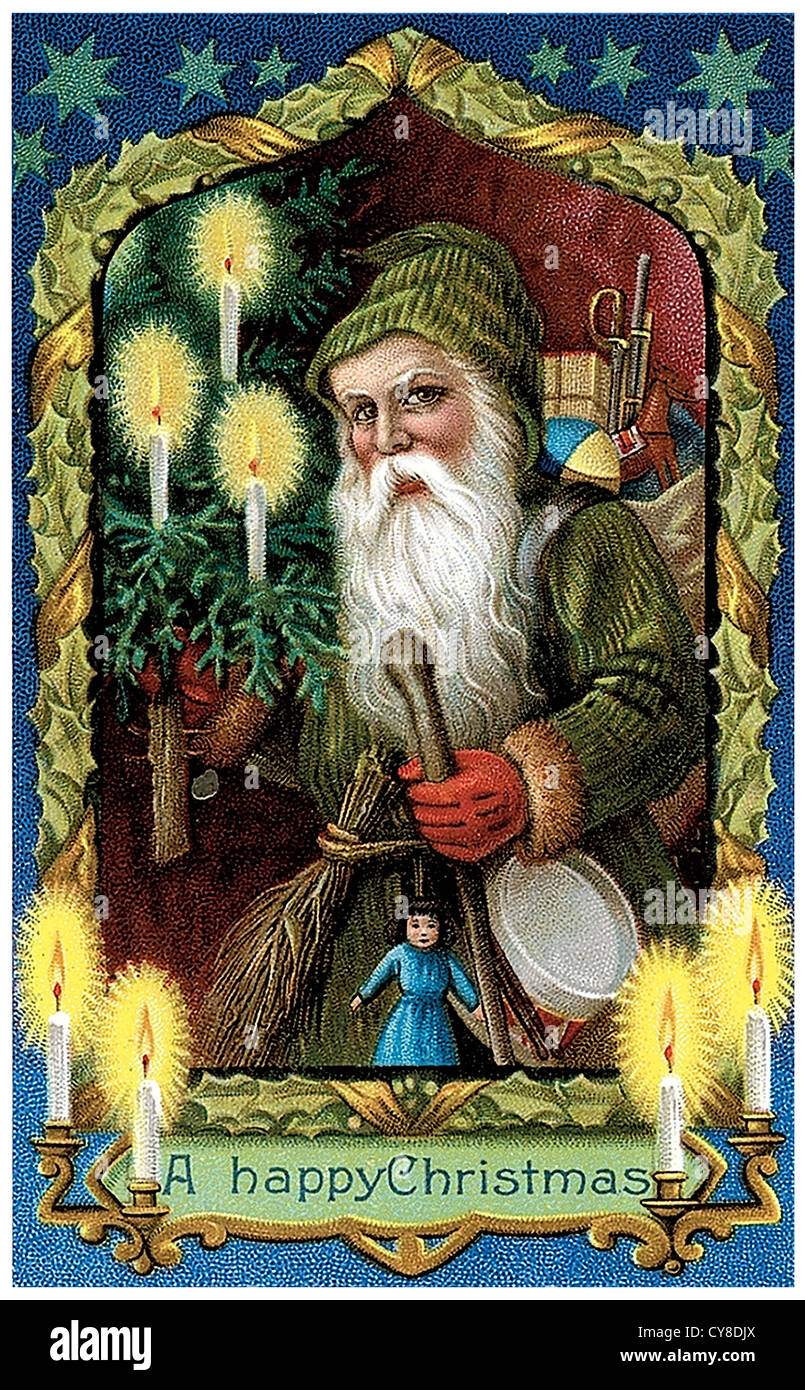
Santa Claus is derived from the Dutch Sinterklaas, who is derived from St Nicholas, of course. It seems that the idea was transmitted by old Dutch families in New York. But it was popularized by the famous poem by Clement Clark Moore. Credit for Santa’s red coat and toy workshop at the North Pole goes to cartoonist Thomas Nast.
Black Peter (The Netherlands)
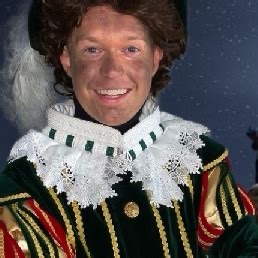
This character, known as Zwarte Piet, has a long and complex history, and was sometimes depicted as a caricature of a Black person, using blackface makeup. His role is to give sweets to children who have behaved well. Recently he has been given a makeover as Sooty Pete, in response to protests about the racial connotations of his appearance.
Lucia (Sweden)
Lucia is a multilayered character too. She started as a witch character (Lussekäringen) being chased through the woods, and was later replaced by the 4th century Sicilian Christian saint who brought food to Christians hiding in the catacombs of Rome, wearing a crown of candles on her head. Luciatåg is celebrated in Sweden with processions and carol singing.
Lucia is trailed by handmaidens (‘tärnor’), star boys (‘stjärngossar’) and gingerbread men (‘pepparkaksgubbar’). If children are participating in the procession, they may choose to be dressed as Christmas elves (‘tomtenissar’). As for each individual group’s attire, Lucia’s defining feature is the lit-up wreath on the top of her head.
Perchta (Germany)
Perchta is the character with a goose foot who travels with the wild hunt and rules mysterious wild beings called the Perchten (perhaps the forerunners of Krampus?). She was involved with spinning and would check to see whether girls had spun their allotted amount of flax during the year. She would also punish people who ate more than the traditional meal of fish gruel on the day that was dedicated to her.

Holda / Holle (Germany)
Holda or Holle is responsible for the snow, and it is often said that the snow is the result of her shaking a pillow full of feathers out of her window. She is also associated with spinning and weaving, and is sometimes regarded as synonymous with Perchta.
Krampus (Germany)
The figure of Krampus accompanies St Nicholas on his visits to children on 5 December (the eve of St Nicholas’ Day) in the Central and Eastern Alpine folkloric tradition. He has become very popular in other parts of the world.
Julenisse (Norway)
The Julenisse is a gnome or elf who brings presents at Christmas. This tradition may have fed into the depiction of Santa Claus as a “jolly old elf”. He is one of many nisse. One of the best depictions of the Julenisse is from the wonderful Norwegian Post Christmas ad from 2021.
Joulupukku (Finland)
Joulupukki was originally a goat (pukki is a Germanic word meaning a billy-goat), but has recently become more anthropomorphic. He lives in Korvatunturi, a hill shaped like a giant ear (so he can hear the requests for presents). Joulupukki is often mentioned as having a wife, Joulumuori (lit. ’Old Lady Christmas’). [More about Joulupukki and his influence on modern Santa from the Finnish Folk Witch on Threads.]
The Yule Goat (Norway)
The Yule goat is very popular in Norway and Sweden and you can even buy straw ones from IKEA. It is quite a complex tradition: there is a form of guising called Julebukking (going from house to house dressed as the Yule goat); the Yule goat is often seen as the bringer of Christmas gifts; and people often decorate their houses or Christmas trees with Yule goats made of straw. It has been suggested that the Yule goat is ultimately derived from Thor’s goats.
The Yule Cat (Iceland)
In Iceland, the Yule cat (Jólakötturinn) roams across the land, eating anyone who is not wearing new clothes. Jólakötturinn is linked with other beings from Icelandic folklore, and is regarded as the pet of the ogress Grýla and her sons, the Yule Lads. It is, however, a relatively modern tradition, dating from the 1860s and only firmly established in the 1930s. As with many stories of monsters, trolls, and ogres, these stories were used to frighten naughty children into behaving, and Grýla is associated with spinning wool (rather like Holda and Perchta).
These are just some of the beings associated with this time of year. Do you have different ones in your region? Let me know in the comments!
Merry Yuletide!




 Dowsing for Divinity