People who say that you can’t do anything about world events: that is what collective action is for. Boycotting products that harm people you care about is very effective. The BDS movement has shown that. Letter-writing is very effective. Mass protest is effective (though it doesn’t always feel like it). It helps to build momentum for the cause, at the very least.
A guy I once chatted with at a demonstration said it’s best to pick one cause and work on that. Otherwise you end up scattering your efforts all over the place and not making as big of a difference.
My causes are LGBTQ+ rights, Indigenous rights, climate change, and Palestine. I couldn’t pick only one. These are the things that I write to politicians about, protest about, boycott products for, and read articles about so that I’m informed.
Apparently politicians assume that for every one person who writes to them about an issue, there are ten more who care, but didn’t write a letter. Writing to politicians is one of the more effective things you can do. And if you use a template, reword it so it’s in your own words. Amnesty International has proved that letter-writing is incredibly effective. Writing a letter says, we can see what you’re doing, we are holding you accountable.
Targeted mass boycotts work. That’s why the BDS movement exists — to try to stop funnelling money into the genocidal apartheid regime of Israel. That’s what helped to bring down the apartheid regime in South Africa. But the boycotts need to be targeted so that the biggest contributors to the problem actually notice a drop in their income.
Reading the news
I read the headlines in The Guardian and some of the articles. I haven’t watched the news on TV for the best part of four decades (I got fed up with the way everything was a “story” — no, this is people suffering). I keep up with the main events in the causes that I try to contribute to. Erin in the Morning on Substack is an important source of information on trans rights. And for Palestine and other colonized countries, I recommend Juliet Diaz (also on Substack), who talks about actions that you can take. For the environment and climate change, I recommend Earthly Education (currently on instagram, and they also have a Discord server for activists).
One does not need a blow-by-blow account of everything. It’s enough to get a summary. You definitely don’t need to spend two hours or more a day reading or watching the news. It’s disempowering and is more likely to make you feel detached from the events depicted. Listening to news on the radio is better in my experience, but I try to avoid news programs that refer to everything as a “story”, or speculate about events that are going to happen instead of reporting what has happened.
Instead, focus on the causes you care about and concrete actions that you can take. If you live in Canada, a great place to start is the On Canada Project, which also has a presence outside Instagram — check out their group project initiatives for ways to make a difference.
You don’t want to feel despair and detachment in the face of all of this. You want to feel like there’s something you can do. And even if your protests and letter-writing and boycotts don’t immediately change the policy of the government—they know that their actions are deeply unpopular and it might cause them to be less brazen in their pursuit of the policy you’re trying to change.
As Martin Luther King once said, “The arc of the moral universe is long, but it bends towards justice.” I don’t think it’s going to get there on its own though — we need to help bend it towards justice (I’m sure MLK would agree with me on that). And the more of us there are pushing, the better. The work of repair is on all of us.
I highly recommend reading Hope in the Dark by Rebecca Solnit, on the history of protest movements and the difference that they made. It might seem like your protest is not making a difference right now, but in the long run, things would be a lot worse if no one had ever protested against injustice.
And at the end of the day, at least you will know that you tried to bend the moral arc of the universe towards justice.
At least you won’t have compromised your own values:
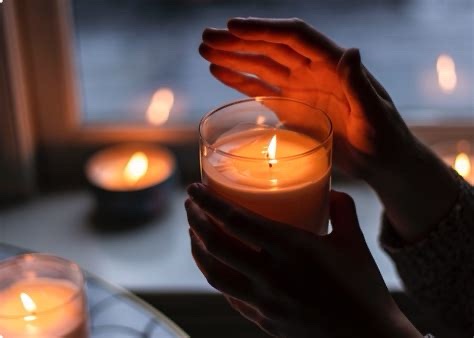
Once a reporter asked [A.J. Muste], “Do you really think you are going to change the policies of this country by standing out here alone at night in front of the White House with a candle?” A.J. Muste replied softly: “Oh I don’t do this to change the country. I do this so the country won’t change me.”








 Dowsing for Divinity