I finally got around to reading the Anne of Green Gables books (although, annoyingly, the boxed set I bought is missing two of the books).
These are some of my thoughts on the books.
One thing that we have to remember is that these books were written between 1908 and 1921. So they do reflect the time period when they were written. I’d say that they were relatively progressive in their day.
Absences
One glaring omission is the almost complete absence of Indigenous people, Black people, and Francophone people. (Please bear in mind that there are two books that I have not read.)
One of the books mentions that the Indigenous name for Prince Edward Island is Abegweit.
According to Wikipedia:
The Abegweit First Nation is a First Nations government located on Prince Edward Island, Canada. Originally part of the Lennox Island First Nation, its headquarters is at Scotchfort, known as Skaqmk. This is the location of a historic Míkmaq portage route connecting Mimtugaak to Kadotpichk.
There is a character who might have been either Francophone or Black or both (it’s not clear) who tells Anne that Gilbert didn’t die.
Kindred spirits
Anne finds “kindred spirits” in people who share her love of poetry, imagination, art, books, and Nature. But sometimes she succeeds in finding kindred spirits among people who don’t share her worldview; it’s just a bit harder to find kinship with them.

Later in the series, she meets Leslie, a person who also looks out for kindred spirits, but she calls them “people who know Joseph”. This is a Biblical reference, and when I searched for it online, I found that some Christian bloggers were saying that it means that the kindred spirits were Christians. But there are plenty of Christians who don’t care about imagination and poetry and Nature, and plenty of non-Christians who do care about them. I think it would be better to say that kindred spirits are people with mystical tendencies. The books themselves make it clear that Anne doesn’t find all Christians to be kindred spirits.
I’ve found a lot of kindred spirits in the Pagan community (but you don’t have to be a Pagan to appreciate poetry, art, imagination, and Nature, either). And I have found kindred spirits among many different kinds of people, including Christians (especially LGBTQ+ Christians and ones who love Tolkien’s legendarium).
I was rather shocked to discover that Anne doesn’t really like cats. That crosses her off my list of kindred spirits. I think that there’s more than one type of kindred spirit.
And another thing: Anne supports the Conservative Party. I realize that politics back then was more about who your family voted for than what the party’s policies were, but since there was no NDP back then, I would’ve been a Liberal voter.
Obviously being a Conservative is worse than not liking cats, but both are reprehensible.
Themes
The chief message of the Anne books seems to be that imagination and laughter are good things, and that loving Nature and beauty is a powerful component of spirituality. This attitude is contrasted with the sanctimonious Christianity and Calvinism of many of the islanders, who think it’s wrong to laugh in church.
There’s a strong message about not beating or whipping children, and setting boundaries, and being consistent.
However, I would argue that the books were not actually written for children, even the first book where Anne is a child. The humour in the books is aimed at adults who are charmed by the quirky questions that children ask, and I have found them genuinely funny as an adult. I think a lot of the humour would’ve gone over my head as a child.
I read the first book, Anne of Green Gables, when I was a kid, but I never read the rest of the series until now (partly inspired by Brenton Dickieson’s enthusiasm for them).
Now that I am familiar with the flora and fauna of Canada, when she mentions the flowers of PEI, I can visualize the flowers (which was not the case when I was a kid, since the flowers of Britain are very different from the flowers of Canada).

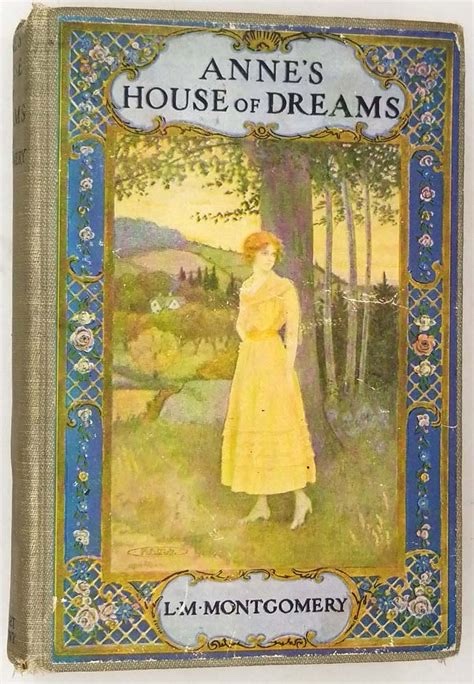
My favourite book in the series is Anne’s House of Dreams (book 5). The characters of Leslie and Captain Jim are fascinating, and the whole book is suffused with the presence of the sea. It was just magical.
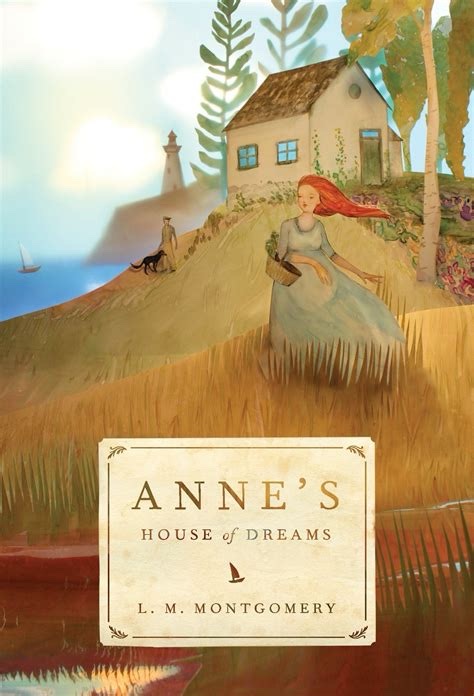
But somehow all of the books are unputdownable; the story just grabbed me and wouldn’t let go. It was good to immerse myself in the world of the story, too.
I’m still reading the last book, which is very sad as it deals with the First World War.
Overall, I think more people should revisit these books. There’s a lot more to them than the raspberry cordial incident (though that is very funny).
Update
It seems that Lucy Maud Montgomery did like cats, which might explain why there are two instances of cruelty to cats in the books — perhaps she was trying to get other people to care about cats too. But I think there should be a content warning for cat lovers. I finished the last book last night and was horrified about what happened to the kitten.
The last book really brought home how it would’ve been during WW1 to be at home waiting for news and not know what was coming next or if the Allies would win. The bit about Dog Monday was especially poignant.
Overall though, the books are like a love letter to Nature in general and PEI in particular. The descriptions of the natural world are outstanding.


 Dowsing for Divinity