The Pagan / occult / Heathen / witch communities are large and diverse, and in many ways they are distinct and separate communities. Nonetheless, there are still certain goals that these communities have in common.
But trying to organize Pagans is like the proverbial herding of cats. How do we organize as Pagans to achieve those goals without crushing individuality and diversity, nor introducing structures which may become oppressive in the future?
There are various tensions in religions in general that are worth examining to avoid falling into the same traps.
Esoteric vs exoteric
I think one of the tragedies of many religions is that they often crush mystics and exclude them from the community for being too weird, and/or threatening the role of the established clergy. Sometimes the mystic is killed (Al Hallaj, Jesus, etc); sometimes they go on to found their own religion or subgroup (the Buddha, St Francis, etc). Sometimes a capable organizer or evangelist goes on to found the new religion on behalf of the deceased mystic (St Paul for example).
But what happens when the second or third generation comes along who never met the mystical founder(s)?
In an exoteric religion, adherents follow the teachings laid down by the founder(s). In an esoteric religion, adherents are initiated so as to create their own connection to the Mystery. I prefer the latter — but I also realize that not everyone has the time or inclination to become an initiate.
The interesting thing about a lot of contemporary Pagan traditions is that we don’t have mystical or charismatic founders — we are inspired by ancient Pagans. Gardner, Valiente et al are more like St Paul figures than Jesus figures. They were spreading an idea rather than claiming to be a messiah. They may have been personable but they weren’t charismatic in the sense of converting people by the force of their personalities.
Many new religious movements (such as Osho’s Sannyasins) failed or faltered when the founder died. Because Wicca is based on the idea of the witch as a Pagan figure, rather than on Gerald Gardner’s personality, it has staying power beyond his lifetime. He is not the Wiccan messiah or prophet.
Shared vs divergent goals
Sometimes humans come together to work towards a shared goal such as protecting the environment or protesting against a war. Such large scale efforts are often coalitions of groups with otherwise disparate goals and interests.
Creating such a coalition involves negotiations with partner organizations about what they will work on together, and what they will not address (because they don’t agree). I discussed this at length in this post about broad coalitions.
Quis custodiet ipsos custodes
This is always the biggest objection as soon as anyone brings up the topic of any sort of overarching Pagan organization: Who shall watch the watchers? Along with the oft-quoted dictum that “power corrupts; absolute power corrupts absolutely.”
However, Pagan organizations do exist and they have often achieved a lot in terms of representation of Pagans to governments and officials, helping Pagans find community, and so on. They’re not perfect (shock revelation, I know) but they have made tangible progress.
If we don’t give control of our distinct groups to any organization intended to represent the Pagan community, then they won’t have control. They can create model policies for events and groups, and provide resources for local Pagan communities, but they aren’t in charge of those local communities.
The role of leaders
Leadership and priestesshood and training people for such roles are always controversial. But I think it would be good to develop some expectations around these roles, just in case any Pagan community ever gets large enough to sustain professional priesthood (unlikely since the congregational model seems to be in decline everywhere).
Luckily we already have a system for that: Cherry Hill Seminary, which offers excellent academic courses for Pagan leaders.
Offering resources
Diotima Mantineia has suggested an organization that would offer resources and mediation:
… if you suggested building an organization that would offer mediation, charitable outreach, magical and ritual training, etc for those who request it, and could come up with a framework for creating independent local chapters of such an organization, I’d be interested to hear more.
…
I’ve been deeply involved in the Pagan community for 40 years now. One of the things I treasure about it is the independent thinking, the willingness to challenge social and theological norms, the courage that is needed to live outside social norms and mainstream religions.
This is the model I and others have inevitably gravitated towards when involved in anything involving ethics, consent, etc. Examples of this approach include the Declaration of Deeds, the Pagan theologies wiki, the Pagan Consent Culture website, and the Pagan Community Statement on the Environment organized by John Halstead some years ago.
Other sources of inspiration
Personally, I think the organizational structures that would serve the Pagan, occult, and witchcraft communities best are the ways Indigenous peoples self-organize. We need to avoid cultural appropriation in how we draw upon these models, but they’re clearly sustainable and based on a genuine respect for the land and the environment.
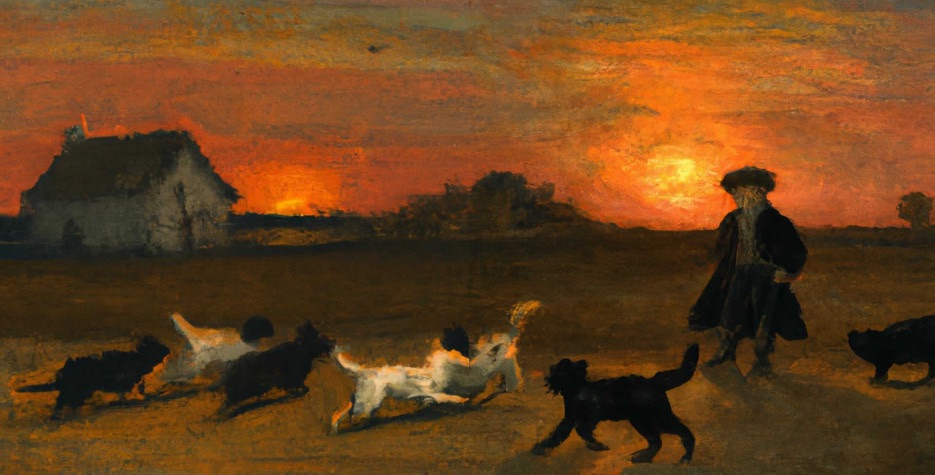
Can cats be herded?
Cats cannot be herded, but they can be persuaded to play nicely together, and only poo in one place, in the interests of the greater good.
Pagans and related groups can form alliances and coalitions without crushing each others’ individuality. The trick is to identify common ground and shared goals, and focus efforts there, and agree to disagree on anything that can’t be agreed upon (as long as it’s not unethical).
I think the format to follow to establish shared goals and values is interfaith dialogue, where each person states their truth without commenting adversely on the other person’s truth. It is possible to disagree profoundly in this context— but without attacking the other person.
Related articles
- Yvonne Aburrow (2020), Pagan leadership course
- John Beckett (2025), Building the future of Paganism
- Yvonne Aburrow (2015), Pagans and money
- Yvonne Aburrow (2013), The varieties of religious experience
- Christopher Freeman’s series of Facebook posts:
Other resources
- The Pagan and Heathen Symposium Code of Conduct
- Pagan Consent Culture (book co-edited by Christine Hoff-Kraemer and Yvonne Aburrow)
- Brendan Myers’ 2013 Code of Conduct effort (included as an appendix in Pagan Consent Culture)
- Cherry Hill Seminary
- The Pagan Federation (UK)
- Pagan Federation International
- The Heathen Declaration of Deeds
- Declaration 127 (the forerunner of the Declaration of Deeds).
- “A Pagan Community Statement on the Environment,” which was written through a collaborative effort in 2014 and published on Earth Day 2015 at ecopagan.com.





 Dowsing for Divinity
Leave a comment